

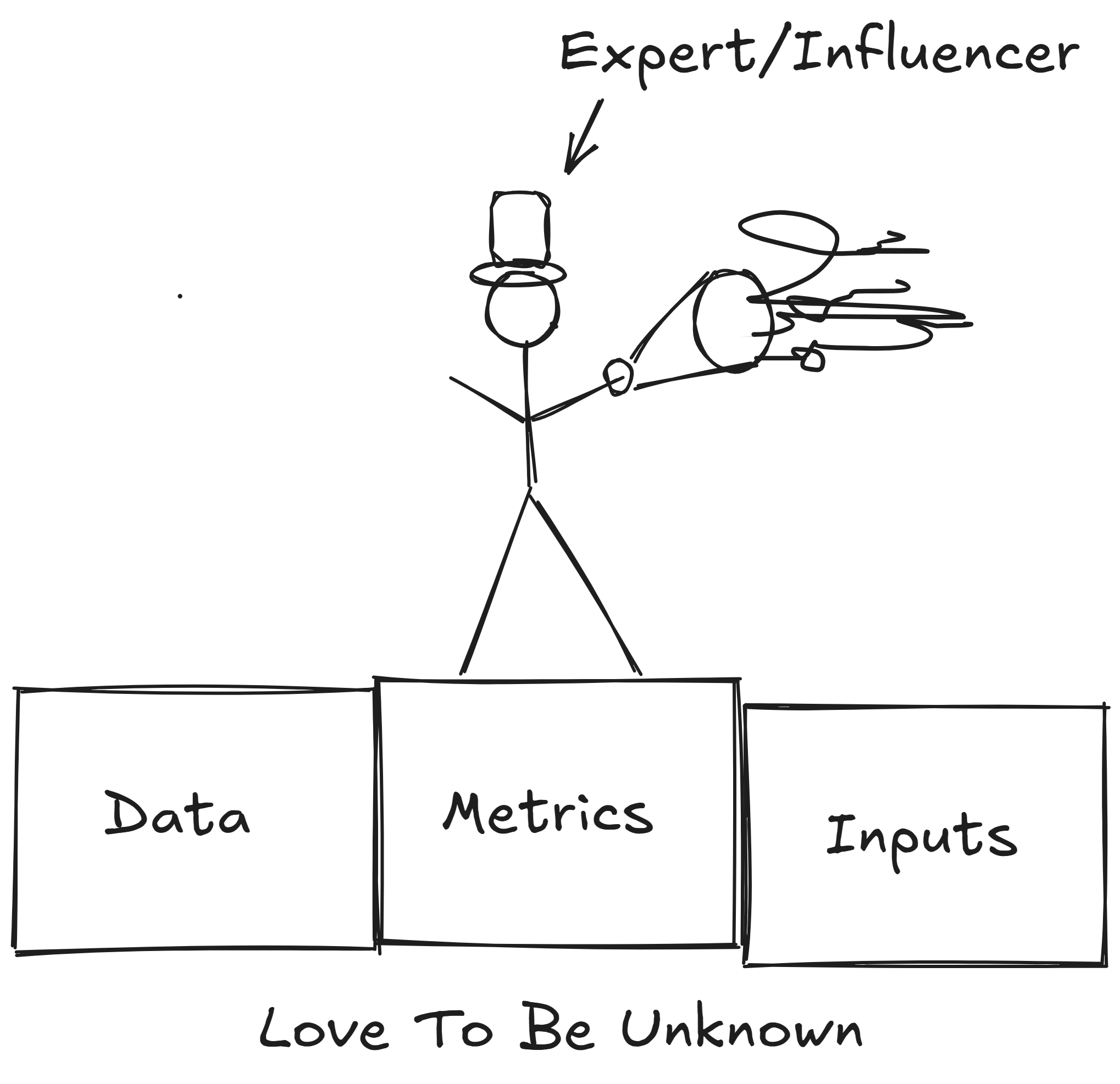
The Addition Machine—that ageless system of “always more”—has pulled off its greatest deception: convincing us that the endless accumulation of inputs leads to a life of depth.
It has turned the human mind into a constantly reprogrammable flash memory device, overwritten daily by a never-ceasing flow of static, all while leaving the soul starving for the un-engineered connections it actually desires.
The Historical Blueprint
If you are new to this site and this series, welcome. This is the second installment of a 52-week deep and revealing exploration of 15th-century monk Thomas à Kempis’s The Imitation of Christ.
For those of you just climbing aboard this slow-moving thought train, à Kempis’s Christian classic and decade-long exploration of simplicity is the second best-selling Christian work of all time—right next to the Bible itself.
His earthly life and work collided head-on with the impending invention of Gutenberg’s printing press—the hardware that launched Information Age 1.0 and gave à Kempis’s work a worldwide audience as the presses roared to life.
(If you missed it, go here to read the prologue to the series).
He was born into a grim and violent world rife with global pandemics, Papal schisms, and the seemingly interminable Hundred Years’ War that ravaged the continent.
It leaves the reader pondering how a man standing in the middle of such catastrophically tragic turmoil managed to write with utter focus on removing oneself from the noise of the world and building spiritual clarity through simplicity and humbleness before God.
The Monk’s Text Fragment
“Shun too great a desire for knowledge, for in it there is much fretting and delusion. Intellectuals like to appear learned and to be called wise. Yet there are many things the knowledge of which does little or no good to the soul, and he who concerns himself about other things than those which lead to salvation is very unwise. Many words do not satisfy the soul; but a good life eases the mind and a clean conscience inspires great trust in God.”
— Thomas à Kempis, The Imitation of Christ (Book 1, Chapter 2)
The Eyewitness Confession: The Knowledge Junkie
The good monk à Kempis would have a field day measuring me up against his admonitions on information gluttony—and even vanity through the accumulation of knowledge.
I stand guilty as charged.
I just turned 57, and I have been collecting, pocketing, and hoarding information since I was a very small boy. In retrospect, it didn’t particularly matter what the information was.
The history of Cincinnati, varieties of fish in the Amazon, the manufacturing process for concrete, etymology one moment, entomology the next—bugs, words, industries, rivers, plant species in the Nightshade family—it all felt like pure and essential fuel for my young mind.
On my eighth birthday, my parents poured gasoline on a fire that was already glowing hot.
I can still smell and feel the glossy, polished pages and the sharp edges of the golden gilding: the 1977 World Book Encyclopedia set.
With deep chocolate hardback covers and gold letter markings on the spines, I felt I had finally arrived at the palace of wisdom William Blake either warned us about or encouraged us to travel.
I was never quite sure which he was suggesting.
My daily routine during those scorching Texas summers was simple.
I would grab a volume at random from the shelf and take a seat on the bright green shag carpet in our converted garage—the room my family affectionately and appropriately called the “Green Room.”
What hooked me wasn’t just the raw volume of facts, but the hidden architecture within the text.
Long before Tim Berners-Lee wrote the first line of HTML, the editors of World Book had constructed a physical, paper-bound hyperlink network.
At the end of an entry on Mark Twain, a small list of cross-references invited me to jump to the entry for the State of Missouri.
From Missouri, a bolded cross-reference led to the history of steamships.
From steamships, I was routed directly to the thermodynamics of steam engines, which bumped me to the physiology of heat stroke, which routed me directly to the St. Louis Cardinals.
These were purely analog hyperlinks that magically transported my insatiable young mind to the next irresistible destination in one of the set’s 22 volumes.
I would pore over the pages for hours, endlessly chasing more data I could squirrel away for some grand but unknown future purpose.
Decades later, when my wife had me take an Enneagram assessment, the result surprised no one: “The Investigator.”
In the 1980s, I picked up John Naisbitt’s bestselling Megatrends and read his prediction of a world in transition from an industrial economy into an “information society.”
I remember being highly intrigued by the prediction, but too young to grasp its terrifying scale.
But over the next thirty years—working inside the technical industry apparatus, writing for Texas Instruments, and sitting across from early social web pioneers—I watched Naisbitt’s prediction solidify into a global Skinner Box: a deterministic cage of social engineering algorithms built by Silicon Valley.
Our Psychological Armor
Here’s the bitter truth I’ve had to confront in my own journey: the never-ending task of collecting facts can easily morph into an invisible armor to protect ourselves from the vagaries and vulnerabilities of a true spiritual quest and authentic relationships.
I’ve always treasured the ability to “plug into any conversation in any room.” Whether the audience consists of engineers, plumbers, or accountants, there’s always a handy data point or observation to be offered.
And yet subtly, all of the information can become a deep source of vanity.
Ultimately, it allows us to use generalist expertise to shield ourselves from the quiet and the solitude of our own minds and spirits—and the inherent frailty of our humanness.
Data surrounds us. We are drowning in it, yet our souls remain completely malnourished.
Let’s remember the good monk’s warning:
“Indeed a humble rustic who serves God is better than a proud intellectual who neglects his soul to study the course of the stars.”
The Active Subtraction Directive: The Anonymous Input
Your assignment for the week ahead strikes directly at the heart of personal branding, status-seeking, and validation loops.
For the next seven days—together—let’s focus on executing The Anonymous Input.
Your Mission: Engage deeply in one significant act of deep learning, creative production, or quiet service this week. Read a difficult chapter, write a private reflection, or help someone in secret.
The Blackout: Let’s focus on anonymity—the ultimate tool for subduing the ego. Don’t tweet what you’ve done. Don’t post it on social media. And don’t use it in conversation to appear holy, wise or learned.
The Result: Let the knowledge and experience sit quietly in your mind, un-monetized and unexpressed to the world. You’ll find—we’ll find—that we don’t need the network’s approval to validate our existence.
Let it be.
To support this independent space or bring the clarity of subtraction to your own project’s philosophy, visit our foundation page.
Excellent … Will be engaging this week!