

We all know it—God, do we know it. It’s 3:14 a.m. and it happens—the sudden but expected buzz from the sleek black rectangle on the nightstand. As always, there’s the sudden spike of the heartbeat, the shortening of breath. And the strange chemical cocktail of adrenaline, anticipation, and low-grade dread.
You tell yourself: Maybe it’s your cousin Tony, calling to be bailed out of jail again. Maybe it’s the long hoped-for nocturnal text from Janet, intimating she may still be in love. Or possibly it’s your fitness app admonishing you that you haven’t completed your daily “steps” goal.
The content of the notification really doesn’t matter. What does matter is that B.F. Skinner is the one making the call. And he is making the exact same call at this exact same moment to millions of other digital device junkies across America and around the world.
The demand is always identical: “Your attention is required NOW!! Sleep is for the dead.”
Smart devices give us the ability to stay in perpetual and perfect connection with our loved ones and the larger world. At least that’s the marketing lie we’ve swallowed whole from smartphone manufacturers and clever software developers.
The truth—and most of us suspect it—is wholly different. We don’t own our devices; they own us, around the clock and in every life event. They command complete fealty and instant response—whether we’re fast asleep, in line at the grocery store, or coaching our kid’s little league team.
Dr. Skinner’s Magic Box
To understand why we can’t look away from our screens today, you have to realize that the architects of the modern web didn’t just stumble into addictive design. They systematically took the clinical, cold findings of mid-century psychological laboratories and baked them directly into software code.
In the 1950s, Harvard psychologist B.F. Skinner constructed what would become known as the “Skinner Box”—an isolated chamber designed to study operant conditioning. In layman’s terms, “operant conditioning”, is a simple way of saying that our “choices and actions” are dictated by the events in our external environment.
Inside the box, a pigeon or a rat was exposed to a simple lever. Skinner discovered that if the lever dropped a food pellet every single time the animal pressed it, the animal would eat until it was full, and then walk away. The poor beast unknowingly retained its autonomy.
But then Skinner fiddled with the math. He introduced what is called a Variable Ratio Schedule of Reinforcement. He made the reward unpredictable. Sometimes the lever dropped a pellet. Sometimes it dropped nothing.
The results were chilling. Exposed to the unpredictable reward, the animals became unhinged - completely obsessive. They lost their minds. They would peck and claw at the lever continuously, ignoring their own biological needs, driven to madness by the slot-machine psychology of maybe next time I’ll get a winner.
For decades, this radical behaviorism remained confined to the sterile halls of academia. Pigeons pecked levers in Cambridge; humans carried lunch pails and punched time clocks.
Skinner’s Box Goes Digital
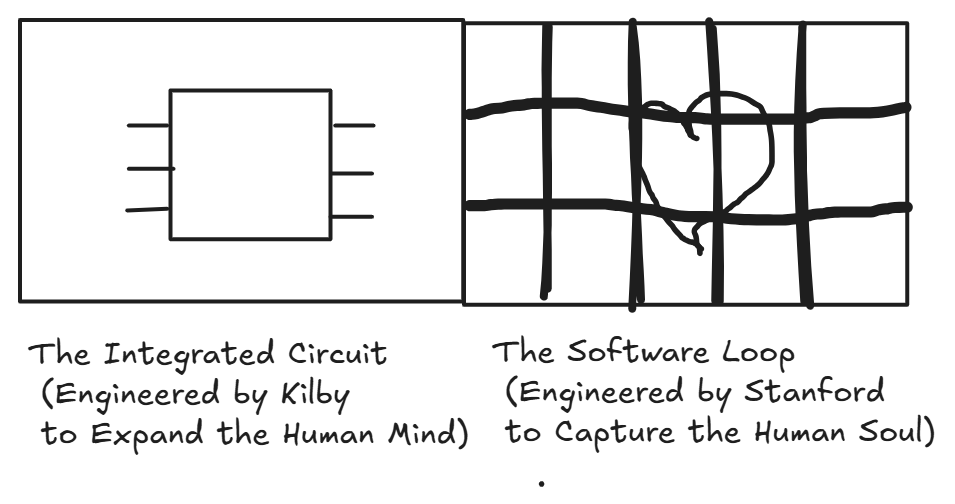
But in the late 1990s, a primary intellectual bridge was built. A behavioral scientist named B.J. Fogg founded the Stanford Persuasive Technology Lab. Its explicit mission? To study how computing devices could be deliberately designed to alter human behavior, beliefs, and reflexes.
Fogg took Skinner’s raw conditioning principles and translated them into design frameworks the technology industry could exploit. It was the birth of automated digital persuasion.
By 2005, those frameworks had escaped the lab. They were running wild in Silicon Valley, being white boarded by a small, elite circle of pioneers who realized that if you could master the code of human behavior, you could capture the world - or at least monetize the hell out of it.
We like to tell ourselves that we are using tools to stay connected. The truth is much colder: the tool is using us. We are occupying a space that treats the human soul not as an image of the Creator, but as a reactive organism to be conditioned, measured, and harvested.
We treat this constant, frantic hyper-reactivity like an accidental byproduct of the digital age. But 20 years ago, I sat in the very rooms where this trap was forged, and I can tell you with certainty: none of this is an accident. At the time, I didn’t fully understand the motivations behind the magic, but using insights and the illumination of time, I can see it all clearly now.
Inside the Rooms
The year was 2005, and my wife and I were in the trenches trying to build a social media startup of our own called Sisterwoman.com. Like everyone else entering the arena at that dawn of the social web, we were captivated by the era’s ultimate holy grail: virality.
Back then, I was still naive enough to believe the myth. I thought “virality” was a sort of democratic magic—an organic phenomenon that naturally happened to certain brilliant brands or unique concepts if they were good enough to capture the public imagination. I thought the internet was a meritocracy of connection.
In retrospect, my naivety ran deeply enough that I think I believed achieving millions of page views was as simple as creating a hip-looking logo, a pleasing design aesthetic and crafting written content that would instantly blanket the globe—just like the chain emails my mother shared from her Sunday School class.
I wasn’t alone in my delusion. I vividly remember well-meaning friends and acquaintances pulling us aside, telling us with wide eyes that we would very soon be fantastically rich.
They didn’t know our business model, our code, or our architectural strategy; they just knew we were starting a “social network”—the undisputed, intoxicating buzzword of an era mesmerized by the rise of MySpace and the nascent, roaring iteration of Facebook. The world truly believed the digital frontier was a gold rush of pure goodwill.
It was only by gaining proximity to the epicenter—by sitting across from the builders of Bebo, Tickle, and Goodreads—that the illusion shattered.
I began to realize that virality had almost nothing to do with the beauty of a site’s concept, the nobility of its mission, or the depth of its community. It was entirely manufactured. It was a cold, calculated engineering requirement.
They weren’t building digital town squares; they were assembling viral factories where human relationships were merely the raw materials fed into the assembly line.
The Stanford Connection
And every single conveyor belt in those factories traced its origin back to a single geographic coordinate: Stanford University. That campus wasn’t just an elite institution of higher learning; it was the ultimate insider nexus for behavioral manipulation.
This was the precise playground where the elite architects of the social web intersected. It was a closed loop—an exclusive insider’s club where the future founders of Bebo, Goodreads, Tickle, and dozens of other nascent networks were concurrently launching distinct ventures while aggressively cross-pollinating and investing in each other’s initiatives.
They were sharing the same playbook, validating the same network theories, and perfecting the same code designed to hack human reflexes.
It was during this exact cultural flashpoint, standing on the periphery of this insatiable network, that I found myself speaking one-on-one with one of the era’s earliest social pioneers — a young engineer who had helped build one of the first true social networks, years before Facebook existed.
The man was, without question, completely brilliant. More than that, he was disarmingly kind — one of the most personable and magnetic individuals you could ever meet.
He wasn’t a cartoon villain scheming in the dark. He was simply a highly perceptive innovator who realized he had found himself at the perfect intersection of history and technology, and he was generous enough to let an observer like me sit across the table from him and ask questions.
He told me directly that his site was adding somewhere between 30,000 and 60,000 new users a day. And he told me, without a trace of self-consciousness, exactly how: address book scraping.
He wasn’t confessing to a sin. He was describing an engineering triumph — because at the time, that’s precisely what it was. He’d been the one who spearheaded the code himself.
I remember being dazzled rather than disturbed. I wasn’t sitting across from a predator. I was sitting across from a man who had cracked a code nobody else had cracked yet, and he knew it, and he was happy to talk about it.
It’s only in retrospect — decades later, writing from the vantage point of subtraction rather than addition — that I can see what that number actually represented. Thirty to sixty thousand people a day, unknowingly volunteered into a network by a friend’s uploaded contact list, never asked, never warned.
Not because anyone in that room was cruel. Because growth was the only metric anyone had been taught to worship, and nobody yet had a name for what it would eventually cost.
Your Address Book, Please
To achieve this, the puppet masters pioneered a practice that would rewrite the code of human interaction: address book scraping.
If you used the early internet, you remember the prompt. A harmless-looking button would suggest you find out if your friends were already on the network. You would log into your Gmail, Yahoo, or Hotmail account, expecting a bridge of connection.
And Voila!
Behind the scenes, the scraping software didn’t just look for your friends. It silently, methodically harvested your entire contact list and turned your personal relationships into fuel.
It slyly spammed every single person you had ever emailed, using your name as a trusted shield to breach their inbox. It was a digital virus masquerading as “community.”
The business plan wasn’t to foster genuine human bonding. The plan was to aggressively engineer a network of millions of captive minds, trade those collective page views for ad revenue, inflate valuations to staggering heights, and flip the entire apparatus for an astronomical multiple to an established media conglomerate.
This is the foundational architecture of the world we now inhabit. The spaces that promised us liberation, intimacy, and global connection were built on a blueprint of mass manipulation.
When the architects of the social web sat in those rooms charting game theory, they were translating Skinner’s variable rewards into digital code. The modern pull-to-refresh feed is the lever. The red notification badge is the unpredictable food pellet.
The Addition Machine engineered your smartphone to be a portable Skinner box, treating your soul like a reactive lab animal, and trading your authentic free will for a hit of dopamine.
The Chip that Jack Built - The Blueprint of the Hinge
Sometimes, in the quiet spaces of my mind, my memory drifts back even further than that 2005 room with that young, brilliant engineer. It drifts back to the early 1990s, when I was a young communications writer for Texas Instruments, penning some of the very first marketing pages for ti.com.
During that dawn of the digital era, I had the immense privilege of sitting down for a one-on-one interview with Jack Kilby—the inventor of the integrated circuit and arguably the most famous tech pioneer of the twentieth century.
Kilby was a towering, wise, and profoundly gentle man. He had originally invented the portable digital calculator not as a commercial product, but simply as a physical proof of concept—a demonstration to a skeptical world that his microchips had practical, life-enhancing applications.
Kilby’s genius was an act of pure, elegant engineering. He shrunk the massive, room-sized vacuum tubes of early computing down to a microscopic sliver of silicon, looking to expand human capability, calculate the stars, and free the human mind from drudgery.
I often wonder what a technological giant like Kilby would think if he could see the world his hardware now supports. I wonder what he would say if he looked at a modern smartphone and realized that his miraculous silicon canvas is now running behaviorist software designed explicitly to diminish human freedom
Kilby built the engine of liberation. Silicon Valley turned it into an automated cage.
The secular world knows it is trapped in this cage. Walk into any bookstore or scroll through any lifestyle blog today and you will see the modern Addition Machine trying to sell us the solution to its own poison.
They call it “digital wellness.” They sell us sleek lockboxes for our phones. They market apps to block other apps. They prescribe “digital detox” weekends—temporary, superficial diets so you can return to the office on Monday morning, refreshed and ready to peck at the behavioral lever all over again.
But you cannot bargain with a Skinner box. You cannot establish a polite, moderate habit with an invisible apparatus engineered by an elite network of Stanford alumni specifically designed to break your will. Throwing away the phone or adjusting your screen settings doesn’t heal the heart.
A 15th-Century Monk Escapes the Addition Machine
The exit from the digital plantation requires a shift from behavioral modification to sacred architectural demolition. It requires the radical, unapologetic work of subtraction.
Five hundred years before Jack Kilby printed his first integrated circuit on a slice of silicon, a monk named Thomas à Kempis picked up a quill in an Augustinian monastery to write The Imitation of Christ.
He was surrounded by no screens, no notifications, and no microchips. Yet, he was fighting the exact same beast. He watched the merchants, the climbers, and the power brokers of the 15th century running themselves ragged on the frantic treadmill of noise, accumulation, and social status—the historical precursors to our modern digital frenzy.
À Kempis understood a law of spiritual physics that the Stanford Persuasive Technology Lab spent billions of dollars trying to make us forget: The Divine does not compete with the hurdy-gurdy of the world.
If the architects of the attention economy spent decades engineering a frictionless interface for distraction, consumption, and digital slavery, then our counter-cultural resistance must be the deliberate insertion of friction.
Subtraction is not a lifestyle diet; it is the systematic clearing of the signal interference. We quiet the rectangle on the nightstand not to optimize our productivity, but because we refuse to lease out the space between our soul and the Creator to venture capitalists trading in the currency of dopamine.
The Radical Act of Subtraction
Is there a moral to this tale of technological intrigue?
Maybe, but if there is one, it is most likely not the reactionary response we’ve been conditioned to expect.
The solution is not to throw your phone out the window of a fast-moving car. It is not to dramatically nuke all of your social media accounts in a fit of righteous digital indignation. And it is certainly not to move to a plywood cabin in the remote Montana wilderness, a la Ted Kaczynski, and take up primitive arms against the abstract tyranny of modernity.
The Addition Machine would love nothing more than for you to choose those options. It thrives on absolute extremes—frantic, hyper-reactive participation or theatrical, unsustainable exile. Both choices keep your attention entirely fixed on the machine itself.
No, the exit strategy is much quieter. It is much more dangerous to the system.
As the name of this community—The Subtraction Machine—implies, our mission here is radical reduction and thoughtful, systematic subtraction. We are not trying to fix the world’s automated persuasion engines; we are clearing the worldly signal interference that diminishes or fully blocks our interface with the Divine.
And what about addition?
Yes, we are at open war with the multifaceted system that seeks to engineer endless, mindless “noise” into every life event. Yet, we do seek an augmentation of a very particular variety. We subtract the artificial so that we can expand, grow, and nurture our unmediated spiritual connection with the Author who gives our lives form, ultimate meaning, and essential joy.
I don’t claim to hold a secret user’s manual designed to instantly manufacture your perfect, frictionless life. I am in the trenches of this digital landscape right alongside you. But together, through this community, we are going to look closely at some ancient cultural and spiritual maps—maps forged by those who walked out of the historical loops of their own eras—that might finally point us toward a more meaningful destination.
To support this independent space or bring the clarity of subtraction to your own project’s philosophy, visit our foundation page.